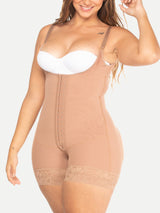
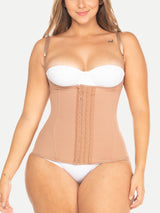
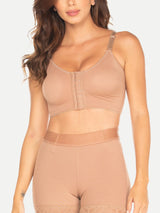




During pregnancy, a maternity support band is the better choice than a faja. Compression shapewear is built to reshape a waist, and a pregnant body is not trying to be reshaped — which is why we do not sell a faja for pregnancy or recommend one. After you deliver, that changes. Once your OB or midwife clears you, a postpartum faja becomes a reasonable option, and most women start around the six-week visit. The easiest first garment is usually the Sculpting Natural Lift Shorts NS001.
In This Article · 7 min read
This question comes up constantly, and most of the answers online are written by people with something to sell during the nine months. We have been fitting Colombian fajas in person at our New Jersey store since 2012, and our honest answer is that pregnancy is the one stretch where the garment we sell is not the right tool. What you want during pregnancy is support. What a faja does is compression. Those are different jobs.
Everything below is general shopping guidance, not medical advice. Your OB or midwife knows your pregnancy and we do not — if they tell you something different from what is written here, follow them.
What to Wear During Pregnancy
A maternity support band, sometimes sold as a belly band or pregnancy belt, is the garment designed for this. It is a soft, wide band that sits under the bump and takes some of its weight off your lower back and pelvis. It does not squeeze your abdomen, and it is adjustable, because your body changes week to week.
We do not make one. That is worth saying plainly rather than steering you toward the nearest thing in our catalog. A maternity band is a different product category, widely available from maternity and medical-supply retailers, and your OB or midwife can point you to the type that suits your pregnancy.
What to look for, if you are shopping for one:
- Adjustable, not fixed. Velcro or a wrap closure that you can let out as the bump grows. A pull-on garment sized to week 20 will not fit at week 34.
- Support under the bump, not pressure across it. The band should lift from below. Nothing should be compressing the abdomen.
- Breathable fabric and no rigid boning. No steel bones, no hook columns, no built-in waist trainer.
- Easy on and off. You will be adjusting it all day and taking it off to use the bathroom constantly.
Separate from a support band, some women are prescribed maternity compression stockings for leg swelling or varicose veins. That is a medical recommendation that comes from your provider, it applies to the legs rather than the abdomen, and it has nothing to do with shapewear.
Why Not a Faja While You Are Pregnant
A faja is engineered to do one thing: apply firm, sustained compression across the waist and abdomen to change the shape of what is underneath. During pregnancy, what is underneath is a growing uterus. The garment is working against the thing your body is doing on purpose.
There is also a practical argument, which is the one we make in the fitting room. Firm compression on a pregnant abdomen is uncomfortable, it gets more uncomfortable every week, and a garment that fits in the second trimester will not fit in the third. Women who buy one anyway tend to stop wearing it within a few weeks, which means they bought a garment they will not use until months later, in a size that will not be right by then.
Waist trainers and corsets are the clearest no. Their entire function is cinching the waist inward, which is not something a pregnant body can or should do.
If you want the plain version: put the faja away until after the baby is born. Our guide to how long to wear shapewear gives the same answer.
After the Baby: When a Faja Makes Sense
This is where compression earns its place. Postpartum, a faja can make you feel held together when your abdominal wall has been stretched for months, support your lower back while you are lifting a baby a hundred times a day, and smooth your silhouette under clothes while your body does its own slower work.
The timing depends on your delivery and your provider.
The first weeks
Light support only. If your hospital sent you home with a soft abdominal binder, that is the garment for this stretch. It is support, not compression, and it is there to make moving less uncomfortable.
Around the six-week visit
This is the standard checkpoint. If your OB or midwife confirms you are healing normally and clears you, a postpartum faja becomes an option. Some women are cleared earlier, some later.
If you had a C-section
The timeline is stricter, because you are also recovering from abdominal surgery and there is an incision that firm compression can irritate. We wrote that up separately in our C-section faja guide, which covers what can sit on the scar and what cannot.
There is no deadline. The idea that there is a closing window for postpartum compression is marketing, not medicine.
Pregnancy to Postpartum at a Glance
| During pregnancy | First weeks after | Once cleared | |
|---|---|---|---|
| Garment | Maternity support band | Light abdominal binder | Postpartum faja |
| Compression | None — support only | Gentle support | Smooth to Sculpt |
| Main job | Carrying the bump, lower back | Comfort when moving | Abdominal support and shaping |
| Where it sits | Under the bump | Loose over the abdomen | High-waisted or full torso |
| Who decides | Your OB or midwife | Your OB or midwife | They clear it, you choose it |
What We Recommend Once You Are Cleared
Four styles cover most of what postpartum customers actually need. All four are latex-free, and none of them has a waist trainer built in.

1. NS001 Sculpting Natural Lift Shorts
Best for: the easiest first garment after delivery. Compression Level 2, Sculpt.
High-waisted shorts that support the lower abdomen and leave your chest completely out of it. No bra, no straps, no hooks across the ribs. For most postpartum customers this is where we start them, because it is the least to manage while you are also managing a newborn.
Fit notes: Natural lift panel, so it reads as your own shape rather than an obvious lift. Mid-thigh length sits smooth under jeans.
2. CB198 Luxe Strapless Shaping Faja
Best for: nursing, and anyone who wants torso coverage without anything on the chest. Compression Level 1, Smooth.
Strapless, so you wear it under your own nursing bra and keep full control of the chest. Smooth is the lightest of our three compression levels, which is the right place to start if you have not worn compression before.
Fit notes: Light compression means comfort over dramatic shaping. If you want firmer hold later, move up a compression level rather than down a size.
3. NS086 Sculpting Faja with Hooks and Built-In Bra
Best for: full torso coverage once you are past the early weeks and not nursing, or done nursing. Compression Level 2, Sculpt.
Coverage from bust to mid-thigh with hook columns you can tighten inward as your body keeps changing. This is the most garment of the four, and the one to grow into rather than start with.
Fit notes: The built-in bra is the reason to skip this one while your supply is establishing — see the breastfeeding section below.
4. 8051 Smoothing Bodysuit with Brief
Best for: everyday wear under clothes rather than recovery support. Compression Level 1, Smooth.
A lighter bodysuit for the stage where you are no longer thinking about recovery and just want a clean line under a dress. Smooth compression, comfortable for a full day.
If You Are Breastfeeding
Firm, sustained pressure on the breasts can contribute to blocked ducts and, at worst, mastitis. A faja with a tight built-in bra is not what you want while your supply is establishing.
Two straightforward ways around it: a strapless style like the CB198 worn under your own nursing bra, so the garment handles only your torso, or high-waisted shorts like the NS001 that leave the chest out of the equation entirely. If you do wear a style with a built-in bra, it should be loose enough that you feel no pressure on the breast tissue, and you should take it off at the first sign of a tender lump.
What a Faja Will Not Do
Being straight about this saves you money and disappointment.
A faja will not close diastasis recti. If your abdominal muscles separated during pregnancy, compression can make you feel more supported day to day, but the repair comes from targeted work. A pelvic floor physical therapist is the right referral, and it is worth asking for one at your six-week visit.
A faja will not shrink your uterus or speed up postpartum recovery. Your uterus contracts back down on its own schedule and a garment does not change that.
And it will not put your body back where it was on a timetable. Bodies that grew a person take their time, and "bouncing back" is a phrase invented to sell things. The honest benefit is support while you are moving around, and a smoother line under clothes while the rest happens at its own pace.

Sizing After Delivery
Measure your natural waist at its smallest point and your hips at the widest, then compare against the faja size chart for the specific style. Do not order by your usual US clothing size — Colombian fajas size differently.
Two rules specific to postpartum. First, do not buy during pregnancy. Your six-week measurements are not predictable from your pregnant body, and the garment sits unworn in a closet until it turns out to be the wrong size. Second, if you are between sizes, take the larger one. Your body is still releasing fluid and firming up, and a style with multiple hook columns lets you tighten inward over the following weeks instead of buying twice.
The common mistake we correct in the fitting room is sizing down to get tighter compression. The right answer is a higher compression level in your correct size. Compression comes from the garment, not from squeezing into a smaller one.
Frequently Asked Questions
Can I wear shapewear while pregnant?
We do not recommend it. A faja applies firm compression across the waist and abdomen, which is working against what a pregnant body is doing. A maternity support band, which lifts the bump from below without compressing it, is the garment designed for pregnancy. Waist trainers and corsets are the clearest no. Ask your OB or midwife what they prefer for your pregnancy.
What is the difference between a maternity band and a faja?
A maternity band supports. It is soft, adjustable, sits under the bump, and takes weight off your lower back. A faja compresses. It is firm, structured, and designed to change the shape of your waist and abdomen. They are different products for different jobs, and we only make the second one.
When can I start wearing a faja after giving birth?
The six-week postpartum visit is the standard checkpoint, once your OB or midwife has confirmed you are healing normally and cleared you. Before that, a light abdominal binder for support is typical. If you had a C-section the timeline is stricter because of the incision, and if you had complications it moves. Your provider's answer overrides any general guidance.
Will a faja help flatten my stomach after pregnancy?
It will smooth your silhouette while you are wearing it, and it can make you feel more supported while you move around. It does not close abdominal separation, shrink your uterus, or change your body permanently. For diastasis recti specifically, ask your OB for a pelvic floor physical therapy referral.
Is it safe to wear a faja while breastfeeding?
Abdominal compression is generally fine once you are cleared, but sustained pressure on the breasts can contribute to blocked ducts. Choose a strapless style worn under your own nursing bra, or high-waisted shaping shorts that leave the chest alone. Take the garment off if you notice a tender lump.
Should I buy my postpartum faja before the baby arrives?
No. It is the single most common mistake we see. Your measurements six weeks after delivery cannot be predicted from your pregnant body, and the garment usually turns out to be the wrong size. Buy it when you are cleared and can measure yourself.
Ready to shop for after the baby? The postpartum shapewear collection is grouped by coverage and closure so you can shop for the stage you are actually in, and the full Colombian fajas collection is organized by compression level. If you are local, come see us in West New York and we will measure you in person once you are cleared — bring the baby, it is genuinely not a problem.