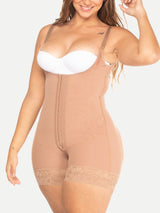
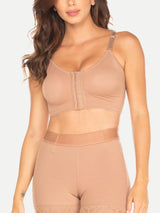





Yes, waist trainers work, but not the way Instagram promised. They deliver immediate waist definition while worn, support your posture through long days, brace your core during strength training, and serve as a behavioral reminder that often changes meal and hydration habits. They do not permanently reshape your body, melt fat, or replace exercise.
In This Article · 8 min read
The Honest Answer
"Do waist trainers actually work" is one of the most-Googled shapewear questions in the United States, and one of the most over-promised. Instagram tells you a waist trainer will give you Kim Kardashian's waist in three weeks. The product page promises "lose 4 inches in one workout." A reasonable person reads that and decides the whole category is a scam.
It is not a scam. It also is not a miracle. The truth lives somewhere our marketing rarely talks about: a properly built waist trainer does exactly four things, and if you buy one expecting those four things, you will probably love it.
We have been fitting waist trainers in our New Jersey store for thirteen years. The women who come back to us year after year are not the ones who believed the magic-promise version. They are the ones who bought a waist trainer to fix one specific problem, and it did.

What a Waist Trainer Actually Does
Four things, all real, none of them magic.
1. It defines your waist while you wear it
Put on a Sculpt-level or Ultra-Sculpt waist trainer with steel boning and Powernet construction, and your waistline is visibly more defined for as long as the garment is on. That is not a permanent change. For an event, a dress, a long day where you want your silhouette to hold its shape, the immediate effect is the entire point.
What it is not: a tool to "lose inches." Any inches you "lose" while wearing the trainer come back the moment you take it off. We say this clearly because customers who buy expecting permanent loss are the ones who write the disappointed reviews.
2. It supports your posture
The structured boning of a real waist trainer keeps your torso upright whether you are sitting at a desk or standing on your feet for ten hours. The garment does the work your core gets too tired to do by 3 PM. Many of our customers, especially those with desk jobs, describe this as the single benefit they did not expect and now would not give up.
Worth noting: this is a postural assist, not a treatment for back pain or any medical condition. If your back issues warrant professional attention, see your provider.
3. It braces your core during strength training
A waist trainer functions a little like a weightlifter's belt. It gives your abdominal wall something to brace against during heavy or compound movements. Many women find they can engage their core more deliberately during deadlifts, squats, or kettlebell work while wearing one.
It also encourages noticeably better form during things like planks and pilates, because the structure of the garment is a constant reminder to keep your core engaged. That part is real. Your form does improve, and over time, so does your core engagement when you are not wearing it.
4. It is a behavioral reminder
This is the effect we hear about most often in store and rarely see written down anywhere else. When you are wearing structured compression, you are physically reminded of your midsection all day. Many women find this nudges them toward smaller meals, slower eating, and better hydration, not because the garment does anything biologically, but because awareness changes choices.
Some marketing language calls this "appetite suppression." We will not, because that language implies a physiological effect that is not really happening. What is happening is behavioral, and behavioral effects compound.
What Waist Trainers Don't Do
Equally important. If you bought one expecting any of these, you bought it for the wrong reason.
- They do not melt fat. There is no garment that does. Fat loss happens through caloric deficit and time. A waist trainer is not in the equation.
- They do not permanently reshape bones, ribs, or organs. Marketing language sometimes implies this. It is not true. Your skeleton is not malleable.
- They are not a substitute for exercise or nutrition. They can be a useful part of a routine that already includes both. They do not replace either.
- They are not a medical device. We do not claim they treat menstrual pain, prevent osteoporosis, or cure anything. If a website tells you a waist trainer treats a condition, that website is making a claim it cannot support.

Should You Wear a Waist Trainer While Working Out?
Short answer: yes for some workouts, no for others. The construction of the garment matters more than the answer to "should I." We recommend wearing either a latex exposed or covered waist trainer such as our Ultra-Sculpt Latex Waist Trainer with Hooks 1026 for working out.
Wear it during
- Strength training (deadlifts, squats, weighted lunges, kettlebell work). The core bracing helps form and engagement.
- Steady-state cardio (walking, treadmill, elliptical, stair-master). Anything where deep oxygen intake is not the limiting factor.
- Standing pilates, planks, side planks. Anything where the garment's structure reinforces the form cue.
- Long days on your feet (retail shifts, nursing shifts, conferences). The posture support pays off.
Take it off for
- High-intensity interval training (HIIT), running sprints, or anything where rapid deep breathing matters. Compression on the diaphragm makes hard cardio harder.
- Floor crunches and traditional ab work. The trainer braces what those exercises are trying to recruit.
- Swimming or hot yoga. Wet compression chafes, and heat plus latex is uncomfortable.
- Sleep. Take it off. Your body needs to breathe through the night.
Three rules if you are going to wear one to the gym
1. Size correctly. Do not size down. Compression that interferes with breathing during exertion is the single biggest reason people get hurt with these. If you are between sizes, size up.
2. Have a second one. Workout sweat does not wash out the next morning. Two trainers in rotation means one is always clean.
3. Fitted clothes over and under. Bulky workout gear under the trainer bunches and chafes. Tight tank or bra top first, trainer over.
How to Use a Waist Trainer Sensibly
There is no fast version. The customers who get results, meaning the four real effects above paired with the actual habits that change a body shape over months, do roughly this.
Week 1: break it in
Wear it 2 to 4 hours a day, broken into shorter sessions. Your core will fatigue faster than you expect. Your skin will need a day or two to get used to the silicone bands. This is normal.
Weeks 2 to 4: settle in
Build up to 6 to 8 hours a day on days you wear it. Skip days are fine, your body benefits from rest from compression. If something hurts (not just feels firm, hurts), take it off and try a softer compression level next time.
Beyond: sustainable wear
8 to 10 hours a day on the days you want it is the practical ceiling for everyday wear. Anything longer offers no additional benefit and increases the chance of skin irritation. Customers who wear waist trainers for years tend to wear them strategically: on big days, work days, gym days. Not 24/7.
Important: this is general everyday-wear guidance, not post-surgical wear. Stage 1 and Stage 2 post-op compression follows your surgeon's timeline, which is typically 20 to 22 hours per day for the first weeks. Always defer to your surgeon for post-op timing. Read our Stage 1 vs Stage 2 vs Stage 3 guide for more on post-surgical timing.
Choosing the Right Waist Trainer
Three styles cover almost every use case. Here is how to pick.
| Pick | Style | Compression | Best For |
|---|---|---|---|
| 1026 | Latex-covered with hooks | Level 3 Ultra-Sculpt | Cardio workouts, latex generates localized perspiration |
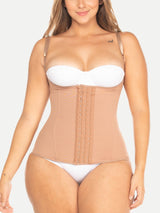
| NS173 | Vest with hooks, full back coverage | Level 3 Ultra-Sculpt | All-day posture and back smoothing under fitted clothes |
| NS006 | Cincher with hooks, removable straps | Level 3 Ultra-Sculpt | Maximum waist focus under low-back or halter outfits |

The cardio pick: 1026
Our Ultra-Sculpt Latex Waist Trainer with Hooks is the only latex-covered waist trainer we carry, and the one most of our customers reach for when they want to wear a trainer during cardio. The latex exterior generates more localized perspiration in the abdominal area during exercise, which is the experience most women associate with classic "workout waist trainers." Same Ultra-Sculpt firmness as the NS173 and NS006 (below), hook closure, structured boning.
Latex sensitivity is real. If you have a known latex allergy, choose the NS173 (latex-free Powernet) instead. The 1026 is also warmer to wear, which is part of the point during a workout but can feel like too much for all-day everyday wear.
The vest: NS173
The Ultra-Sculpt Waist Trainer Vest with Hooks is our recommendation for women who want the full benefit of waist training and care about how their back looks under a fitted dress. Six steel bones (two front, two back, one each side) keep the vest completely rigid through a full day. The vest cut covers the upper and lower back, so bra lines and back bulges disappear under thin fabrics. Latex-free Powernet, which means firm compression without a latex allergy worry. Three rows of hooks let you tighten as the day goes on.
The cincher: NS006
Same Ultra-Sculpt Powernet as the NS173, but cut shorter and waist-focused with removable straps. Choose this if your priority is the waist itself rather than full torso smoothing, or if your outfits skew toward halter necklines, strappy tanks, and low-back dresses where a full vest would show. The strap-removal option is the underrated feature here.
Sizing 101
- Measure your natural waist and bust (the NS173 covers both). Use the size guide, not your usual clothing size. Colombian waist trainers size differently.
- Between sizes? Size UP. Ultra-Sculpt is firm; too small feels restrictive instead of supportive. The hooks give you room to tighten as you settle in.
- Start on the middle hook setting. Tighten to the inner hooks after the first hour as your body adjusts. Never start on the tightest setting.
Full size guide: Waist Trainer Size Chart
Frequently Asked Questions
Do waist trainers actually work?
Yes, for four specific things: they define your waist while you wear them, support your posture through long days, brace your core during strength training, and serve as a behavioral reminder that often changes meal and hydration habits. They do not permanently reshape your body, melt fat, or replace exercise.
Do waist trainers work for weight loss?
No. There is no garment that causes weight loss on its own. Some women lose weight while incorporating a waist trainer into a routine that includes diet and exercise. The waist trainer is not what is causing the loss. Marketing that claims otherwise is overpromising.
How long should I wear a waist trainer each day?
For everyday wear, build up gradually. Week 1: 2 to 4 hours per day. Weeks 2 to 4: 6 to 8 hours per day. Long-term: 8 to 10 hours per day on days you choose to wear it. More than that offers no additional benefit and increases skin irritation. Post-surgical use follows your surgeon's timeline, which is different.
Is it safe to wear a waist trainer while working out?
Yes for steady-state cardio and strength training, with three caveats: size correctly (do not size down), use a workout-rated waist trainer (not a corset), and listen to your body. Take it off for HIIT, sprints, swimming, hot yoga, and floor crunches.
What is the difference between a waist trainer and a faja?
A waist trainer targets the midsection only. It focuses compression on the waist and upper abdomen. A faja typically covers more of the body (waist, hips, thighs, sometimes bust) and offers compression in multiple zones. Choose a waist trainer for waist-specific focus; choose a faja for full lower-body or post-surgical compression.
Are waist trainers safe?
When sized and worn correctly, yes. Risks come from sizing down for "faster results" (which restricts breathing during exertion), wearing one to sleep, or wearing one for medical purposes a waist trainer is not designed for. If you have a medical condition affecting your spine, ribs, or breathing, consult your provider before regular use.
Ready to try one? Browse the full Colombian waist trainers collection, or shop our best-selling fajas if you want to see what most customers actually buy. If you want a real person to help you size and choose, our team has been fitting waist trainers in our New Jersey store for thirteen years. We do this in real life every day, and we are happy to do it through chat or email at support@colombianaboutique.com.