
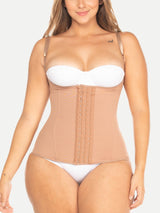









Stage 1, Stage 2, and Stage 3 fajas are designed for different points in your recovery and are not interchangeable. Stage 1 protects healing tissue in the first 1 to 14 days post-op with light to moderate compression. Stage 2 supports active recovery from weeks 3 to 12 with medium to high compression. Stage 3 delivers maximum compression for final contouring from month 3 onward.
In This Article · 7 min read
- What Does "Stage" Mean in a Faja?
- Stage 1 Faja: Immediate Post-Op
- Stage 2 Faja: Active Recovery
- Stage 3 Faja: Contouring and Maintenance
- Stage Comparison at a Glance
- Difference Between Stage 2 and Stage 3
- Can You Skip a Stage?
- BBL Recovery Specifics
- How to Measure for the Right Stage
- Frequently Asked Questions
If you have been told you need a faja after surgery and you are staring at three different compression stages wondering what the difference is, you are in the right place. Stage 1, Stage 2, and Stage 3 fajas are not interchangeable. Each one is designed for a specific point in your recovery, and wearing the wrong stage at the wrong time can slow healing or cause discomfort.
This guide explains exactly what each stage does, when to wear it, and how to know when to move on to the next one. All styles referenced are made in Colombia and available at Colombiana Boutique.
What Does "Stage" Mean in a Faja?
The stage number refers to the compression level and structure of the garment, not just how tight it is. A Stage 1 faja is designed for the most sensitive period immediately after surgery, when your tissue is swollen, tender, and needs gentle, even pressure. A Stage 3 faja is designed for a body that has largely healed and needs firm compression to finalize contouring and maintain results.
Think of the stages as a progression your body moves through, not a ranking of which faja is better.
Stage 1 Faja: Immediate Post-Op (Days 1 to 14)

Who It's For
Stage 1 is worn immediately after cosmetic surgery, typically liposuction, BBL, tummy tuck, or abdominoplasty. Your surgeon will usually instruct you to put it on before you leave the recovery room.
What It Does
A Stage 1 faja applies light to moderate compression designed to reduce swelling, manage fluid buildup, and help your skin begin to adapt to its new contours. The compression is firm enough to be therapeutic but gentle enough for a body in acute recovery.
Key Features to Look For
- Front zipper or hook closure for easy on and off without straining incisions
- Open crotch design so you do not have to remove it to use the bathroom
- Breathable Powernet fabric that will not trap heat against healing skin
- Mid-thigh or full-length coverage depending on your procedure
How Long to Wear It
Most surgeons recommend Stage 1 for the first 1 to 14 days post-op, worn 22 to 23 hours per day. You will know you are ready to move on when your surgeon clears you and the garment starts to feel noticeably loose.
Stage 2 Faja: Active Recovery (Weeks 3 to 12)

Who It's For
Stage 2 is the transition garment. Your swelling has reduced significantly, your incisions are healing, and your body is ready for firmer compression to continue shaping and support lymphatic drainage.
What It Does
A Stage 2 faja applies medium-to-high compression that actively helps your skin retract and conform to your new shape. It also continues to manage residual swelling and supports the connective tissue as it heals. Many patients describe Stage 2 as when they start to see their results taking shape.
Key Features to Look For
- Higher compression rating than Stage 1, look for Powernet combined with Lycra or reinforced panels
- Boning or structured panels in the abdominal area for flattening and contouring
- Hook-and-eye closures allow you to tighten as swelling continues to reduce
- Longer coverage for full thigh and hip contouring if you had a BBL or lipo on the flanks
How Long to Wear It
Typically weeks 3 through 12, though this varies by procedure and how your body heals. Wear time usually drops to 12 to 16 hours per day at this stage as your surgeon allows more time without the garment.
Stage 3 Faja: Contouring and Maintenance (Month 3+)

Who It's For
Stage 3 is for patients whose primary healing is complete and who are now focused on maximizing their final results. It is also used by women who want high-compression sculpting for daily wear, events, or workouts, not just post-surgery.
What It Does
A Stage 3 faja delivers maximum compression for active shaping. At this point your tissue is stable, so the garment can work aggressively to define your waist, flatten your abdomen, and lift and shape the hips and thighs. Many women continue wearing a Stage 3 faja well beyond their recovery as part of their regular routine.
Key Features to Look For
- Ultra-high compression fabric, double Powernet or reinforced sculpting panels
- Hook-and-eye or zipper closure with multiple adjustment rows
- Full torso coverage for complete abdominal and waist contouring
- Some Stage 3 styles include built-in boning for posture support
When exactly should you switch to Stage 3?
Most patients transition around the 10 to 12 week mark, once their surgeon confirms primary healing is complete. The physical sign is that your Stage 2 garment feels noticeably looser and your results look stable. At that point, Stage 3 compression actively works on finalizing your contours rather than supporting healing tissue.
Stage Comparison at a Glance
| Feature | Stage 1 | Stage 2 | Stage 3 |
|---|---|---|---|
| When to wear | Days 1 to 14 | Weeks 3 to 12 | Month 3+ |
| Compression level | Light to moderate | Medium to high | Maximum |
| Primary purpose | Reduce swelling, protect tissue | Shape and drain | Contour and maintain |
| Daily wear time | 22 to 23 hrs | 12 to 16 hrs | As desired |
| Who uses it | Post-op patients | Post-op patients | Post-op and daily wear |
What Is the Difference Between Stage 2 and Stage 3?
Stage 2 is a recovery garment. Its primary job is managing residual swelling, supporting lymphatic drainage, and helping skin retraction as your body heals. Stage 3 is a contouring garment. Your swelling is largely resolved and your tissue is stable, so the garment's job shifts from protecting healing tissue to maximizing your final shape. Stage 3 fajas typically use double Powernet or reinforced sculpting panels that would be too aggressive for a body still in active recovery.
Can You Skip a Stage?
Not recommended. Jumping from Stage 1 directly to Stage 3 applies compression your healing tissue is not ready for, which can cause discomfort, interfere with lymphatic drainage, and in some cases distort your results. Your surgeon's guidance always takes precedence. This guide is a general framework, not medical advice.
If you had a less invasive procedure, your surgeon may clear you to start at Stage 2. Some patients with very minor lipo skip Stage 1 entirely. Always confirm with your surgical team.
What About BBL Recovery Specifically?
BBL recovery has one important difference: you cannot sit or put direct pressure on your glutes for the first several weeks. Your Stage 1 and Stage 2 fajas for BBL recovery need to be open-seat or have a strategically cut back panel that keeps pressure off the transferred fat cells while still compressing your abdomen and flanks.
For Stage 3 BBL recovery specifically
Once your surgeon clears you to sit normally and the transferred fat cells are established, typically around the 8 to 12 week mark, a standard high-compression Stage 3 faja is appropriate. At this point full coverage of the glutes is not only safe but beneficial for final contouring of the hips and buttocks.
A standard faja that covers the buttocks fully is not appropriate for early BBL recovery. Look specifically for BBL-compatible styles when shopping for Stage 1 and Stage 2 post-BBL garments.
How to Measure for the Right Stage Faja

Wearing the wrong size in any stage defeats the purpose of the garment. A faja that is too loose will not apply therapeutic compression. One that is too tight can restrict circulation and cause discomfort.
Measure your natural waist (smallest point), your hips (widest point), and your underbust. Compare to the size chart for the specific style you are ordering. Colombian sizing runs differently from US sizing and varies by brand. When in doubt between two sizes, size up in Stage 1 to accommodate swelling, and size down in Stage 3 for firmer compression.
If you are still choosing your first faja, the full Colombian fajas collection is organized by compression level and use case.
Frequently Asked Questions
How do I know when to move from Stage 1 to Stage 2?
Your surgeon will typically clear you at your 4 to 6 week follow-up appointment. Physically, the sign is that your Stage 1 faja feels significantly looser than it did in the first two weeks, your swelling has reduced enough that you need more compression to continue progressing.
Can I wear a Stage 3 faja if I haven't had surgery?
Yes. Stage 3 fajas are worn by many women for everyday sculpting, waist training, and posture support. The stage label refers to compression level and structure, it is not exclusively for post-surgical use.
What is the difference between a faja and regular shapewear?
Regular shapewear is designed to smooth your silhouette under clothing. A Colombian faja goes further, using reinforced compression panels, structured boning, and hook-and-eye closures to actively shape and contour. Fajas colombianas are made to medical-grade compression standards and are designed to be worn for extended periods.
How long should I wear my faja each day during recovery?
Stage 1: 22 to 23 hours per day. Stage 2: typically 12 to 16 hours, reducing as your surgeon advises. Stage 3: as desired, with no required daily minimum outside of a recovery protocol.
Where are Colombiana Boutique fajas made?
Every faja in our collection is made in Colombia, where compression garment manufacturing has been refined over decades. Colombian fajas use Powernet fabrics and construction techniques developed specifically for post-surgical and high-compression applications.