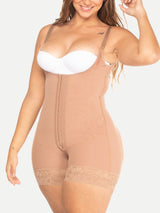
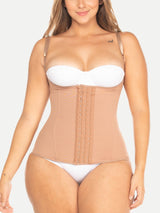
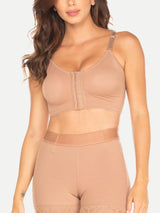

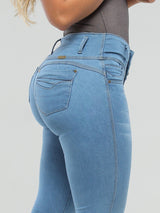






A BBL is one of the most compression-dependent cosmetic procedures. Your Stage 1 BBL faja protects healing tissue and reduces swelling for weeks 1 to 6, worn 22 to 23 hours per day with light to moderate compression. Stage 2 transitions to medium-high compression from weeks 6 to 12, worn 12 to 16 hours per day. Stage 3 begins around month 3 once your surgeon clears full glute coverage. Always defer to your surgeon's specific protocol.
In This Article · 6 min read
A Brazilian Butt Lift is one of the most compression-dependent cosmetic procedures there is. The transferred fat cells need protection, your abdomen needs support, and your lymphatic system needs help draining, all at the same time, from day one. The faja you choose for BBL recovery is not just a comfort item. It directly affects how your results heal.
This guide covers what to look for in a BBL faja at each stage of recovery, what to avoid, and when you can transition to standard shaping compression. All styles referenced are made in Colombia and available at Colombiana Boutique.
Why BBL Recovery Requires Specific Compression
Most post-surgical fajas are designed to compress the full body. For BBL recovery, the approach needs to be more deliberate. The fat cells transferred during a BBL are fragile in the first weeks after surgery. Your surgeon will give you specific guidance on what coverage is appropriate for your glutes and when. Follow that guidance precisely. It takes precedence over any general recommendations in this post.
What every BBL patient needs from day one, regardless of surgeon protocol, is firm compression at the abdomen, waist, and flanks. These are the areas where liposuction was performed to harvest the fat, and managing swelling there is essential from the first day.

Stage 1 BBL Faja: Weeks 1 to 6
In the first weeks after your BBL, your body is managing swelling, fluid drainage, and the early integration of transferred fat cells. Your Stage 1 faja needs to compress your abdomen and flanks to reduce swelling while following your surgeon's specific instructions for glute coverage.
Key features to look for
- Front zipper or hook closure so you can put it on and take it off without twisting or straining incision sites
- Open crotch design for bathroom use without removing the garment
- Abdominal and flank compression panels to manage swelling in the treated areas
- Light to moderate compression, your tissue is in acute recovery and needs firm but gentle, even pressure
- Breathable Powernet fabric to prevent heat buildup against healing skin
Most surgeons recommend wearing your Stage 1 faja 22 to 23 hours per day for the first 4 to 6 weeks. You will also need a BBL pillow when sitting. Your surgeon will advise on positioning requirements specific to your procedure.
Before ordering, confirm with your surgeon which style and coverage level is appropriate for your specific recovery protocol. Our post-surgical fajas collection includes Stage 1 styles your surgeon can guide you toward.

Stage 2 BBL Faja: Weeks 6 to 12
By week 6, your transferred fat cells have established their blood supply and your surgeon will typically clear you to progress to Stage 2 compression. Your swelling has reduced significantly and your body is ready for firmer compression to continue shaping your waist and flanks.
Key features for Stage 2 BBL
- Medium to high compression, firmer than Stage 1 to actively shape as swelling resolves
- Hook-and-eye closures with multiple rows so you can tighten the garment as your body continues to change
- Structured abdominal panels for flattening and waist definition
- Longer coverage through the thighs if lipo was performed on the outer thighs or flanks
Wear time typically drops to 12 to 16 hours per day at this stage as your surgeon allows more time without the garment. Stage 2 is when most patients start to see their final shape taking form.
What to Avoid in a BBL Faja
Not every faja marketed as BBL shapewear is appropriate for post-surgical recovery. Here is what to watch for:
Pull-on styles with no closure
You need to be able to put the garment on without bending, twisting, or pulling it over your hips in the first weeks. Always choose hook, zipper, or snap closure.
Shapewear marketed for daily wear only
Everyday shapewear does not provide the structured, graduated compression your healing tissue needs. Look specifically for post-surgical or high-compression styles.
Sizing down for extra compression in Stage 1
Too much compression in acute recovery restricts circulation and can interfere with drainage. Follow the size chart and size up if you are between sizes in Stage 1.
Stage 3 BBL Faja: Month 3 and Beyond
Once your surgeon clears you, typically around the 8 to 12 week mark when the transferred fat cells are established and primary healing is complete, you can transition to a standard high-compression Stage 3 faja. At this point the focus shifts from protecting your results to refining them.
Stage 3 compression works aggressively to define your waist, flatten your abdomen, and shape the hips and thighs. Many women continue wearing a Stage 3 faja well beyond their recovery as part of their regular routine. Full body coverage is appropriate at this stage once your surgeon clears it.
For a complete breakdown of how each stage works and when to move between them, read our Stage 1 vs Stage 2 vs Stage 3 faja complete guide.
When Can You Switch to Regular Shapewear?
Once your surgeon clears you, typically around months 3 to 6, you can transition from post-surgical compression to a Stage 3 or daily wear faja for maintenance and contouring. At this point compression becomes a tool for shaping rather than healing.
Many women find that a high-compression faja or Colombian waist trainer worn during workouts and daily activities helps maintain their waist-to-hip ratio long after recovery is complete.
How to Measure for Your BBL Faja
Sizing for a BBL faja is particularly important in the early weeks when your body is actively swollen. Measure your natural waist at its smallest point and your hips at their widest point. Compare to the size chart for the specific style you are ordering. If you are between sizes in Stage 1, size up. You need room for swelling and the garment will still provide effective compression.
As swelling reduces over weeks 2 to 6, your Stage 1 faja will feel noticeably looser. That is normal and expected. It means your body is healing. When it no longer feels snug, it is a signal that you are ready to move to Stage 2.
Frequently Asked Questions
Do I need a special faja for BBL recovery or can I use any post-surgical faja?
BBL recovery has specific requirements that your surgeon will outline, particularly regarding coverage and compression in the first weeks. Confirm with your surgical team which style is appropriate for your procedure before ordering. Our post-surgical collection includes styles suited to BBL recovery at every stage.
How long do I need to wear a BBL faja?
Stage 1: 22 to 23 hours per day for weeks 1 through 6. Stage 2: 12 to 16 hours per day for weeks 6 through 12. Your surgeon may extend or shorten these timelines based on your specific procedure and healing rate. Always follow your surgeon's protocol over general guidelines.
Can I wear a waist trainer after BBL recovery?
Yes, once your surgeon clears you, typically around months 3 to 6. A Colombian waist trainer worn during daily activities and workouts can help maintain your waist definition as part of your long-term results. During active recovery, stick to your prescribed post-surgical faja.
What is the difference between a BBL faja and regular shapewear?
Regular shapewear is designed to smooth your silhouette under clothing. A BBL post-surgical faja provides structured graduated compression and construction designed to support healing tissue, not just shape it. Colombian fajas are built to construction standards that everyday shapewear does not meet.
Where are Colombiana Boutique BBL fajas made?
Every faja in our collection is made in Colombia, where compression garment manufacturing has been developed and refined specifically for post-surgical recovery. Colombian Powernet fabrics and construction techniques are used by surgeons and recovery specialists worldwide.